Versilia in Tasca
Cacciucco alla viareggina: what it is, how it differs from Livorno's and how to order it
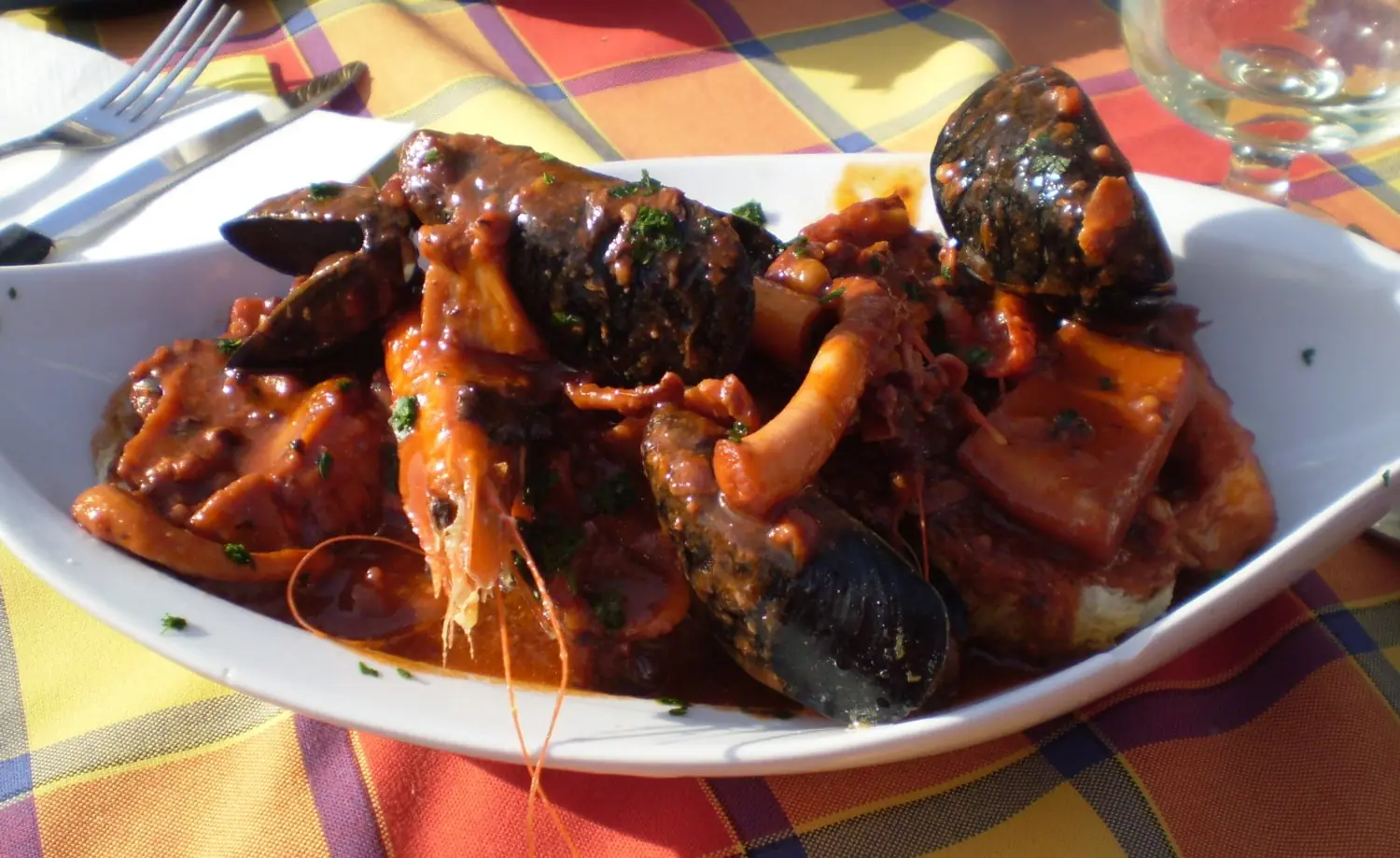
If one dish sums up the Tuscan coast, it's cacciucco. Livorno and Viareggio have always argued over who makes it best, and each defends its own version. Here's what Viareggio-style cacciucco is, how it differs from Livorno's and how to spot a good one when you order.
A fishermen's dish
Cacciucco began as a humble soup: fishermen used the fish they couldn't sell at market — small, bony or "ugly" but full of flavour. They cooked it in a red sauce and served it over slices of toasted bread rubbed with garlic. Many cooks still stress that there's no single, fixed recipe: you make it with whatever fish is in season.
Pellegrino Artusi, in his famous late-nineteenth-century cookbook, already wrote that cacciucco, "however good it may be, is always a very heavy food": a hearty dish to enjoy without overdoing it.
Born as a fishermen's poor dish, today it's the symbol of the coast.
Viareggio vs Livorno
According to food sources, the main differences are:
- Taste: the Viareggio version is described as lighter and less dense, with a red broth. Livorno's is darker and thicker, almost a stew.
- Base: in Livorno it starts with onion, celery and carrot plus sage; in the Viareggio tradition the base is essentially garlic and chilli, without sage.
- Tomato: Viareggio traditionally used tomato paste or tinned tomatoes.
- Shellfish and crustaceans: according to Visit Tuscany, Versilia's cacciucco is "refined" with crustaceans and shellfish, which give it a slightly sweet aftertaste. Other experts point out, however, that the oldest Viareggio cacciucco was made almost entirely with chunks of humble fish: here too, every family has its own truth.
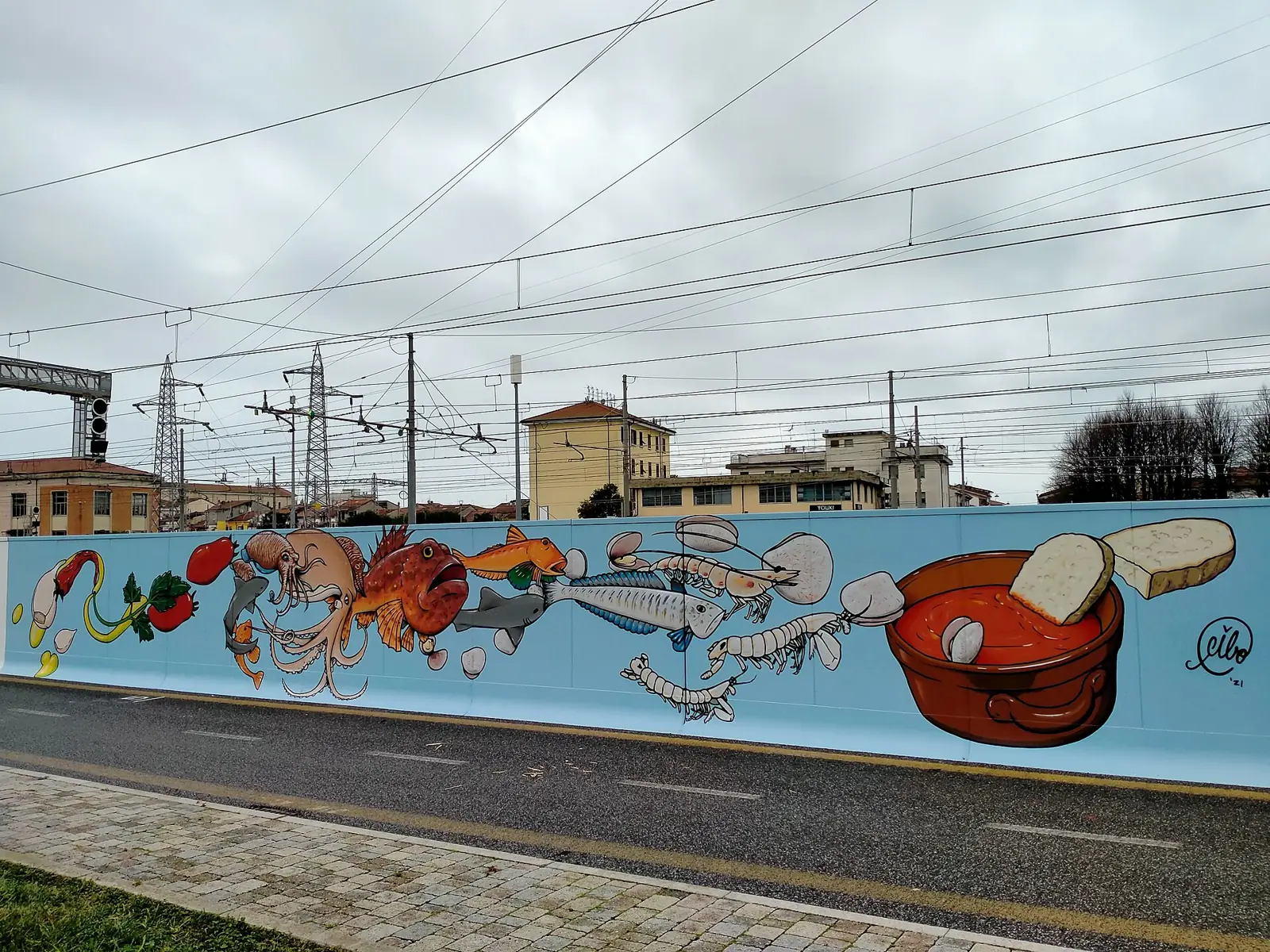
Which fish go in
Traditional recipes typically call for octopus and cuttlefish (or baby octopus), rock and sand fish such as gurnard, scorpionfish and smooth-hound, plus mantis shrimp ("cicale di mare") and, in modern versions, mussels. Each fish goes in at a different time depending on its texture, so nothing falls apart.
How to order a good cacciucco
- Ask if it's made to order. It takes a while to cook: in several traditional places it's best to book it, sometimes even the day before.
- Catch of the day: a good cacciucco depends on freshness. Be wary of menus offering exactly the same dish all year round, at any hour.
- The bread should be Tuscan, toasted and rubbed with garlic, served under or beside the soup.
- Portion size: it's often a meal in itself. Don't order three courses first!
- Wine: cacciucco is traditionally paired with a young red, unusual for fish.
Not just cacciucco
Viareggio's cooking has other seafood dishes to try, such as spaghetti alla trabaccolara (named after the "trabaccoli", the fishing boats) and spaghetti with razor clams, as well as the classic mixed grilled fish dressed with Tuscan extra virgin olive oil. More in our guide to what to eat in Versilia.
Want to try it at home?
You'll need a large, heavy pot (traditionally cast iron or terracotta), mixed fish, tomato, garlic, chilli, wine and plenty of patience. The secret is a good fish stock made with heads and bones.
Cast-iron pot for fish soups (Amazon.it)
In short
Viareggio-style cacciucco is lighter than Livorno's, fragrant with garlic and chilli, and eaten with toasted bread. Order it where the fish is fresh, ideally booking ahead, and leave room: you won't need anything else afterwards.

Frequently asked questions
What's the difference between Viareggio and Livorno cacciucco?
Viareggio's is lighter, with a garlic and chilli base; Livorno's is denser and also uses sage.
What do you eat cacciucco with?
With toasted Tuscan bread rubbed with garlic.
Sources: Visit Tuscany – Sapori di Versilia · Visit Tuscany – Ricetta · Welcome 2 Lucca · Vaghis. General information: opening times, prices and dates change, so always check the official websites.