Versilia in Tasca
Viareggio's Passeggiata a mare: Art Nouveau, sunsets and what to see
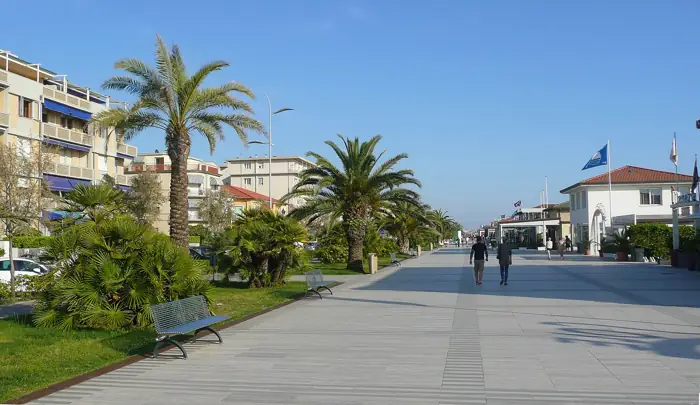
The Passeggiata a mare is Viareggio's seafront: miles of avenues between beach and town, perfect for a stroll, a bike ride or an aperitivo at sunset.
Liberty style and Galileo Chini
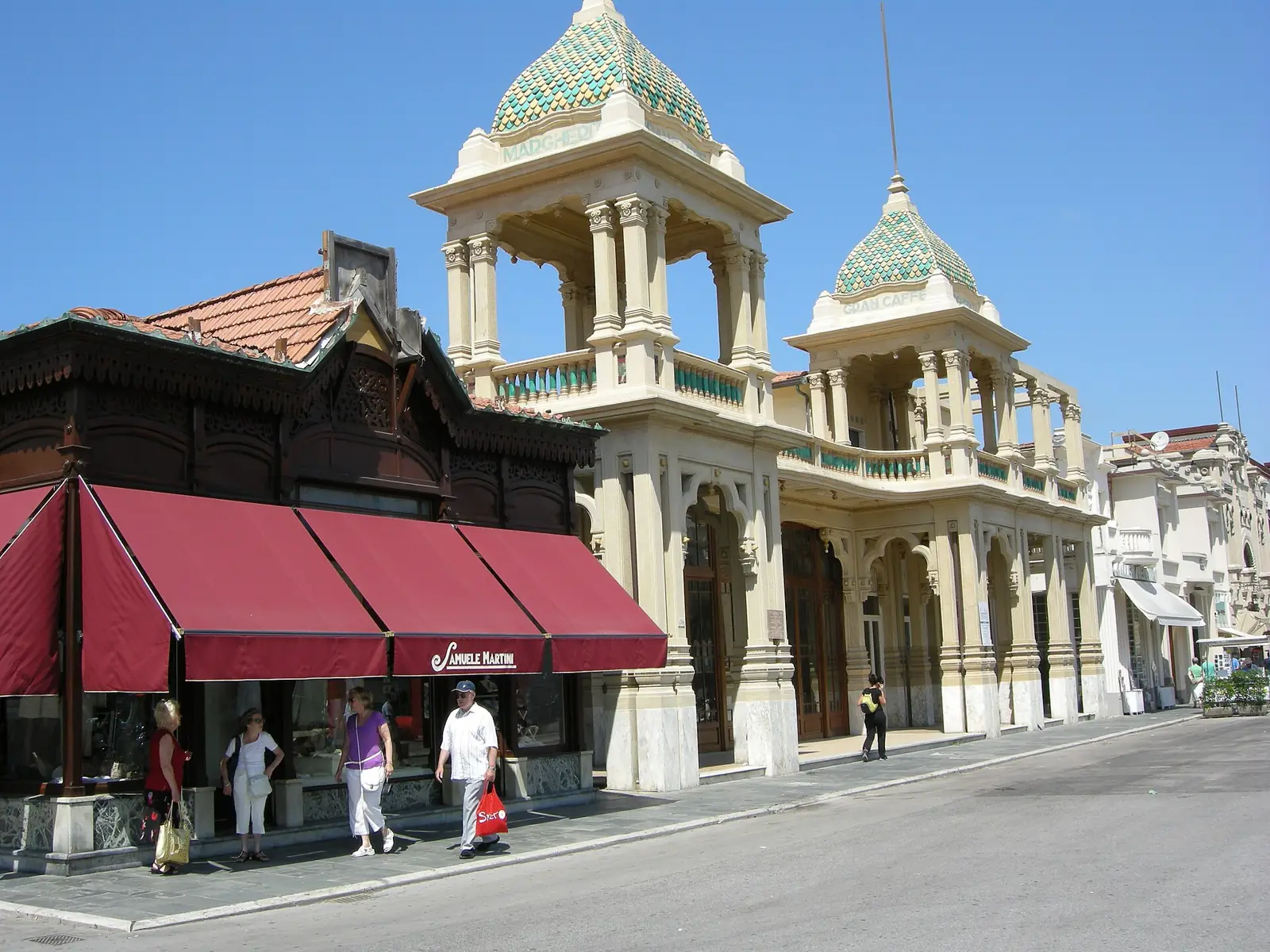
The Passeggiata was originally built of wood. On the night of 17–18 October 1917 a fire destroyed almost all of its wooden buildings. The town used it as a chance to reinvent the seafront: under the 1923 town plan, a committee was formed that included Giacomo Puccini and the painter and ceramicist Galileo Chini. This led to the partnership between Chini and architect Alfredo Belluomini, which gave the Passeggiata its eclectic mix of Liberty (Italian Art Nouveau) and Art Deco.
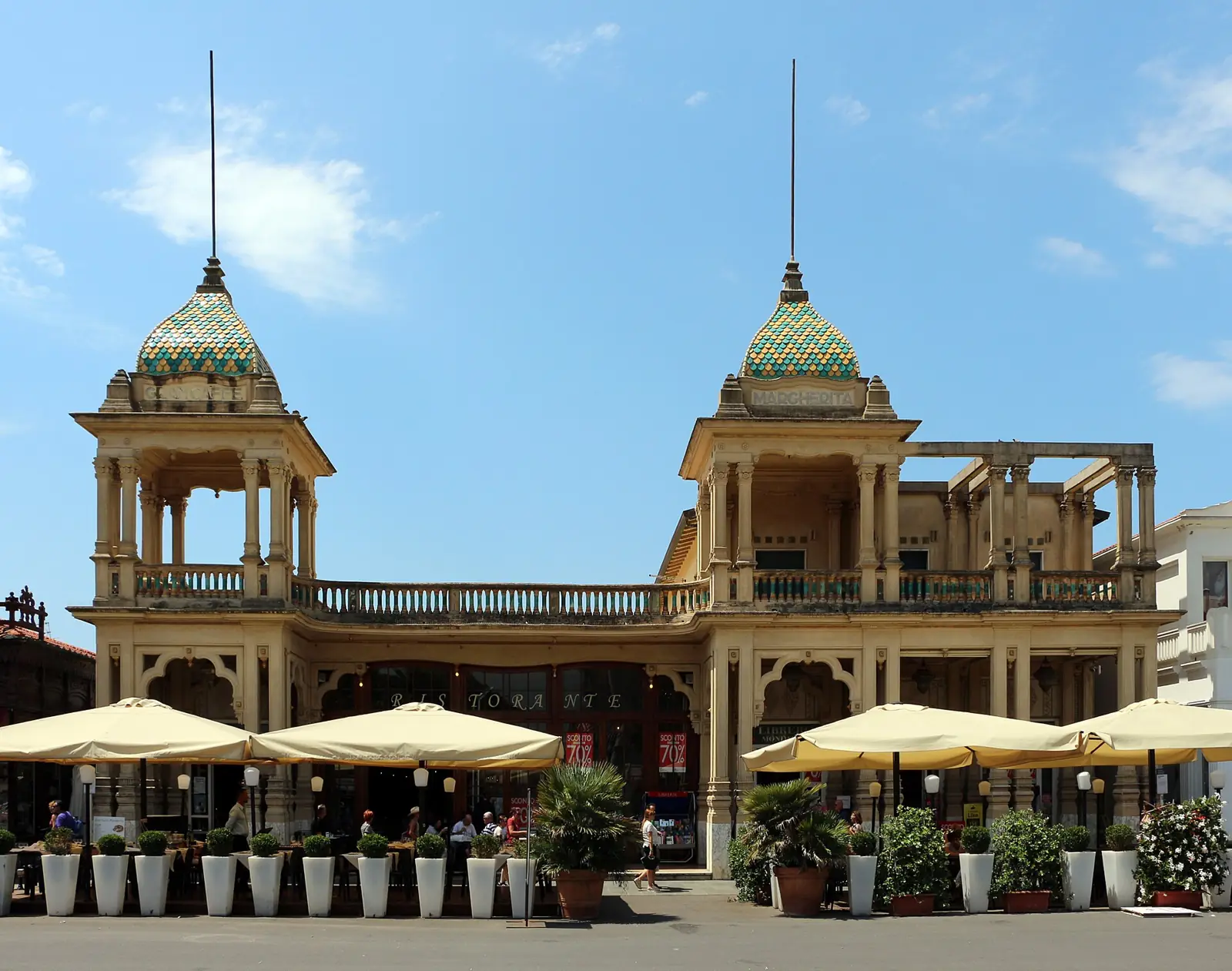
Its icon is the Gran Caffè Margherita: built in wood in 1902, it survived the fire and was rebuilt in brick in 1928 to a design by Belluomini, with Chini's decorations and oriental-style domes covered in colourful ceramic tiles.
From the ashes of the 1917 fire rose the Liberty-style Passeggiata we see today.
What to do
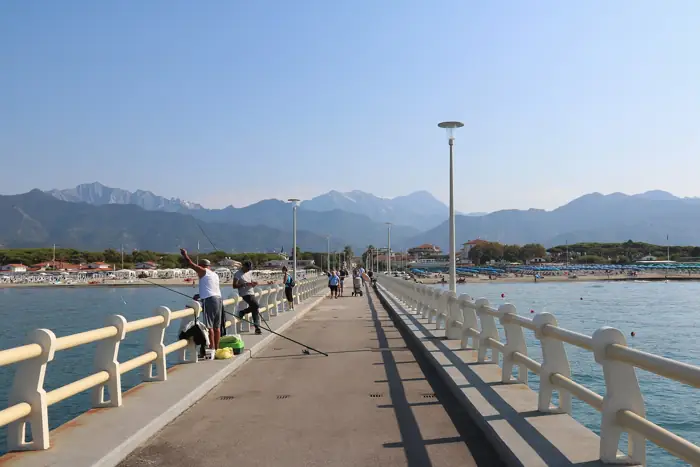
- Walk to the pier and the Darsena, the harbour of the shipyards.
- In winter the seafront avenues become the route of the Carnival floats.
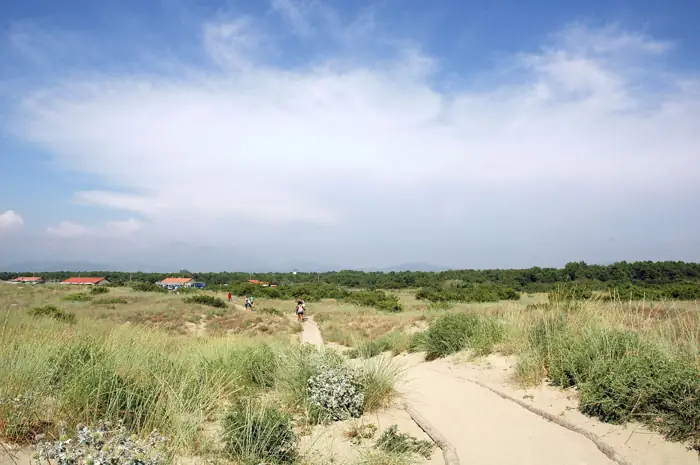
- To the south lie the Pineta di Levante pine woods and the Migliarino San Rossore Massaciuccoli nature park.
Useful gear
Beach towel, sunscreen, cool bag (Amazon.it)

Frequently asked questions
Who decorated the Gran Caffè Margherita?
Galileo Chini, with architect Alfredo Belluomini's design, in the 1928 rebuild.
What happened to the Passeggiata in 1917?
On the night of 17–18 October a fire destroyed almost all of its wooden buildings.
Sources: Wikipedia – Viareggio, Comune di Viareggio – Storia, Il Tirreno, Turismo Lucca. General information: opening times, prices and dates change, so always check the official websites.